
For Parents of Babies 0-24 Months Who Are Exhausted From The Guessing Game
The First Language System - Your Ultimate Guide To Baby Communication
How to end tantrums before they start AND build your baby's brain for higher intelligence using the
Neural Gesture Framework™... without adding another thing to your overwhelmed to-do list!

Discount Expires :
Get The First Language System For Only $37
PLUS! Unlock 7x Free Bonus Gifts

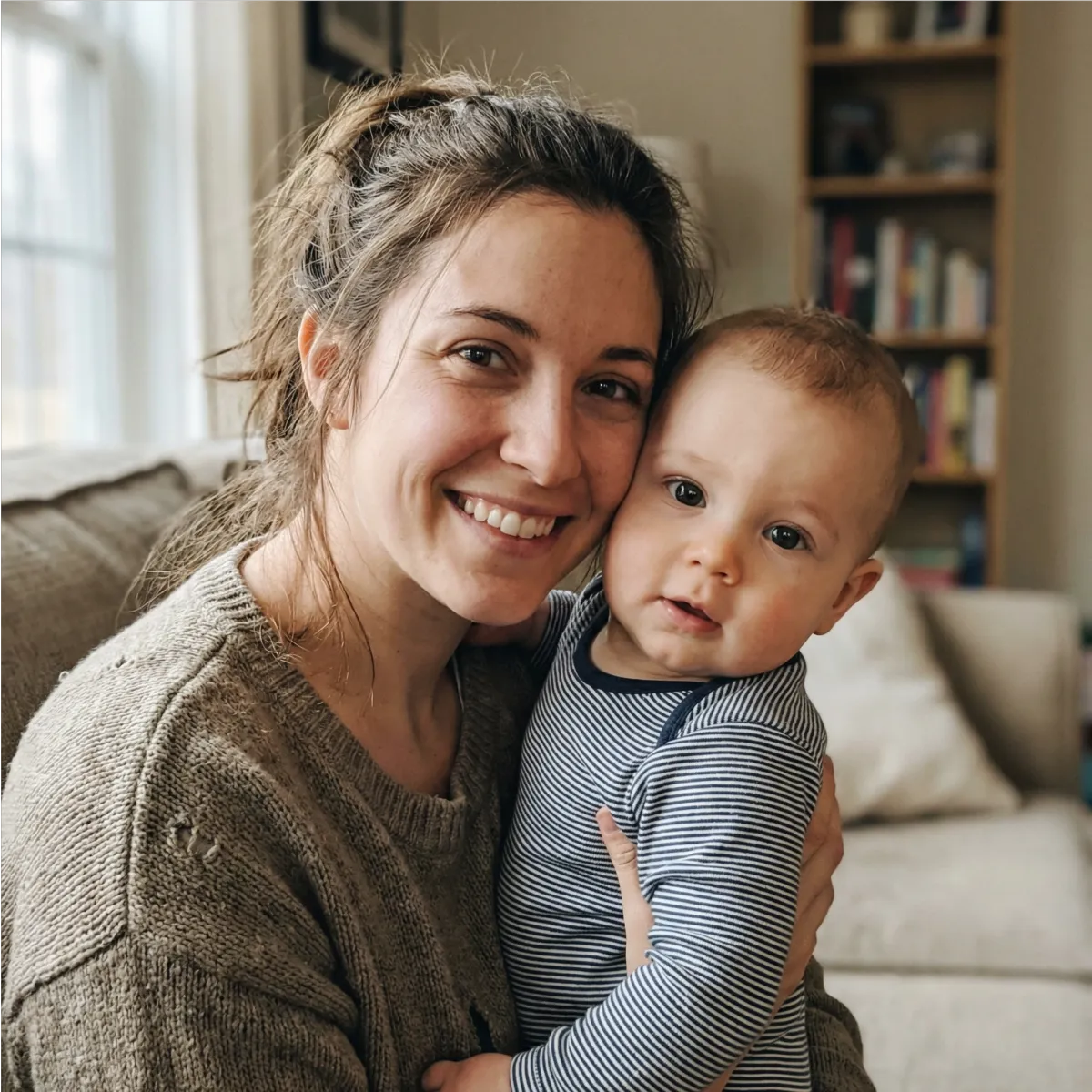
"Watching her little hands make that first sign was better than her first steps"
"When she signed 'milk' for the first time, my husband and I just stared at each other like, 'Did that just happen?' It felt like magic. She was only 9 months old and already telling us what she needed. Now she has six signs and the tantrums have basically disappeared. This is the best thing we've done as parents."
Jane M. ⭐⭐⭐⭐⭐
Verified First Language System Parent
Only A Few Days Left
Discount Expires :
Instant Access | Unlock 7x Free Bonus Gifts
Only $99.00→$37
Instant Download | 7x Bonus Gifts
(Save $62.00 Today)
Enroll Now & Start Watching In 2-Minutes
Now Available For Instant Access

⭐⭐⭐⭐⭐ 4.9 Based on 1,733+ Reviews
100% Secure 256-Bit Encrypted Checkout

Brain Builders Success Stories
Hear From Parents Getting
Amazing Results!
"I had the misconception that if I taught him signs, he'd never bother learning to talk. That actually held me back for a couple of months. But this myth was busted by my pediatrician. She told me to try this out.
My boy picked up his first sign at 10 months, and by about 14 months he was saying the words out loud while still signing them.
At his 18-month checkup, our pediatrician said his verbal skills were a bit ahead of where she'd expect. I wish I hadn't let that worry stop me for as long as it did! But it’s better late than never."

⭐⭐⭐⭐⭐
Sarah K.
"We started signing with Olivia at 8 months honestly just to cut down on the crying at dinner. It worked for that, but the thing I wasn't expecting is how much it seemed to help her long-term.
She's in kindergarten now & her teacher mentioned that Olivia is really strong at expressing herself and identifying her emotions. She's the kid who says 'I'm upset because I wanted a turn' instead of just pushing someone. I strongly believe learning to communicate that early gave her a head start."

⭐⭐⭐⭐⭐
Rachel D.
"When my wife brought this up I was pretty dismissive. I figured it was one of those Instagram parenting trends. But she asked me to just try the sign for 'more' at mealtimes, so I did. About two weeks in, my son looked right at me and did it back.
He was 11 months old. It's hard to describe what that feels like. You realize this little person has been trying to tell you things and now he actually can. I texted my wife a video from the kitchen and she called me back in tears. I went from thinking this was silly to being the one who brings it up to other new dads. It's simple and it just works."

⭐⭐⭐⭐⭐
Mike T.
Now let's cover a few specifics
Here's A Sneak Peek At What
You’ll Find Inside...
The First Language System
The 10 essential signs that cover 90% of what your baby desperately wants to tell you, and exactly how to introduce each one
Why "more" and "all done" are the two most powerful tantrum-prevention tools you'll ever discover, and how to use them starting today
The golden rule of pairing that ensures signs build brain circuits instead of replacing speech development
A simple trick for making sign teaching automatic, with no extra effort or time in your day
The critical timeline so you know exactly when to expect recognition, when to expect sign-back, and when to add more signs
And because I believe that every parent should have access to this information to end the guessing game AND build their baby's brain for greater intelligence...
1,733+Reviews

Real parents. Real results. Join thousands of families who have transformed their communication with their babies using Early Brain Lab's proven system.

The First Language System Is Only $37
That's for lifetime access to the complete guide, with the ability to reference it whenever you need…
Plus 7 quick-start bonus gifts to help you implement immediately, get results
fast, and never feel stuck or unsure what to do next.
Limited Time Offer | Instant Download | 7x Free Bonus Gifts

⭐⭐⭐⭐⭐ 4.9 Based on 1,733+ Reviews
It Looks Like A Tantrum...
But Brain Imaging Shows It's Closer
To A Pain Response — And It's
Happening Every Day

From The Scientists At
Early Brain Lab
New brain imaging research has revealed something most parents have never been told: when your baby can't communicate a basic need, their brain doesn't just register frustration.
It activates the same pain centers as a physical injury.
The same cortisol flooding. The same neurological alarm bells.
And when this happens over and over — meal after meal, bedtime after bedtime — it can actually interfere with the neural pathways your baby is building right now.
Are you doing everything you can think of to understand your baby, but still ending up in tears alongside them when nothing works?
If so, what I'm about to share with you is THE answer.
And it's not just about ending tantrums. Although it will absolutely do that.
It's about something much bigger.
New research shows that specific hand gestures in infancy literally build the neural circuits for symbolic thinking.
Symbolic thinking is the foundation of all language, all learning, all higher-order intelligence.
When your baby learns to connect a hand movement to a meaning, something extraordinary happens in their brain.
Neural pathways form that didn't exist before.
Connections are made that lay the groundwork for everything from reading comprehension to problem-solving to emotional regulation.
Most parents think intelligence is genetic. You get what you get.
But cutting-edge developmental research reveals something different: the right gestural patterns in infancy actually wire your baby's brain for enhanced cognitive ability.
By teaching your baby specific signs through our Neural Gesture Framework, you're not just giving them a way to communicate.
You're literally building their brain.
By following The First Language System,
You'll Never Need To:
Play the exhausting guessing game at every mealtime and bedtime
Suffer through another tantrum that could have been prevented
Watch helplessly while your baby screams because they can't tell you what's wrong
Wonder if you're doing enough to support their development
Feel like a failure when nothing you try seems to work
Ever again. There's a fundamental truth that most parenting advice ignores:
Your baby already knows what they want.
Between 6 and 18 months, your baby understands far more than they can express.
Research shows they comprehend 50+ words before they can speak their first one.
They know "hungry" and "tired" and "my tummy hurts."
They just can't tell you.
So they scream. And you guess. And both of you end up frustrated and exhausted.
The answer isn't waiting for their speech to catch up. That takes months. Sometimes over a year.
Nope.
The 1 principle behind the 'First Language System' is simple:
End The Guessing Game While
Building Your Baby's Brain
And getting these results is as simple as teaching the right gestures, in the right order, at the right moments in your day.
Because even if your baby is developing perfectly normally, they could be missing critical opportunities to build the neural pathways for symbolic thinking.
Think of it like planting seeds.
You don't plant a seed and expect a flower the next morning.
You water it, you give it sunlight, you trust the process. And then one day, seemingly out of nowhere, something breaks through the soil.
Baby communication works the same way.
You model the signs consistently, day after day, and for a while it feels like nothing is happening.
But underneath the surface, neural pathways are forming. Connections are being made. Your baby is absorbing everything. And then one morning at breakfast, they look at you and sign "more."
Every baby gets there. The question is just when, and that depends on when you start planting the seeds.
And every day you wait, you're missing chances to wire their brain for greater intelligence AND end the communication frustration.
Inside the 'First Language System', I reveal how to use the Neural Gesture Framework so you can:
End tantrums at the source by giving your baby a way to tell you what they need before frustration explodes
Build the neural circuits for symbolic thinking that form the foundation for all future learning
Use routines you're already doing to teach signs naturally, with zero extra time or effort
Know exactly what to do when it doesn't seem to be working, so you don't give up right before the breakthrough
Support healthy brain development during the critical window when neural pathways are forming fastest
All while actually enjoying mealtimes, bedtimes, and playtime again.
Best of all, this does NOT mean you need to become a baby sign language expert or add hours to your day.
The scientists at Early Brain Lab are parents too. We designed this system for exhausted people like us.
That means: no complicated techniques, no memorizing hundreds of signs, no scheduling "practice time" you'll never stick to.
It’s woven into your routines seamlessly.
If you can say "do you want more?" at dinner, you can do this.
As it becomes second nature, the tantrums fade and something else takes their place: real connection.
The feeling that you and your baby actually understand each other.
No more dreading meals. No more guessing wrong. No more whispering "what kind of parent can't figure out their own baby?"
Just a simple system that works, designed by parents who actually get it.
Limited Time Offer | Instant Download | 7x Free Bonus Gifts
Build Connection While Building Brains
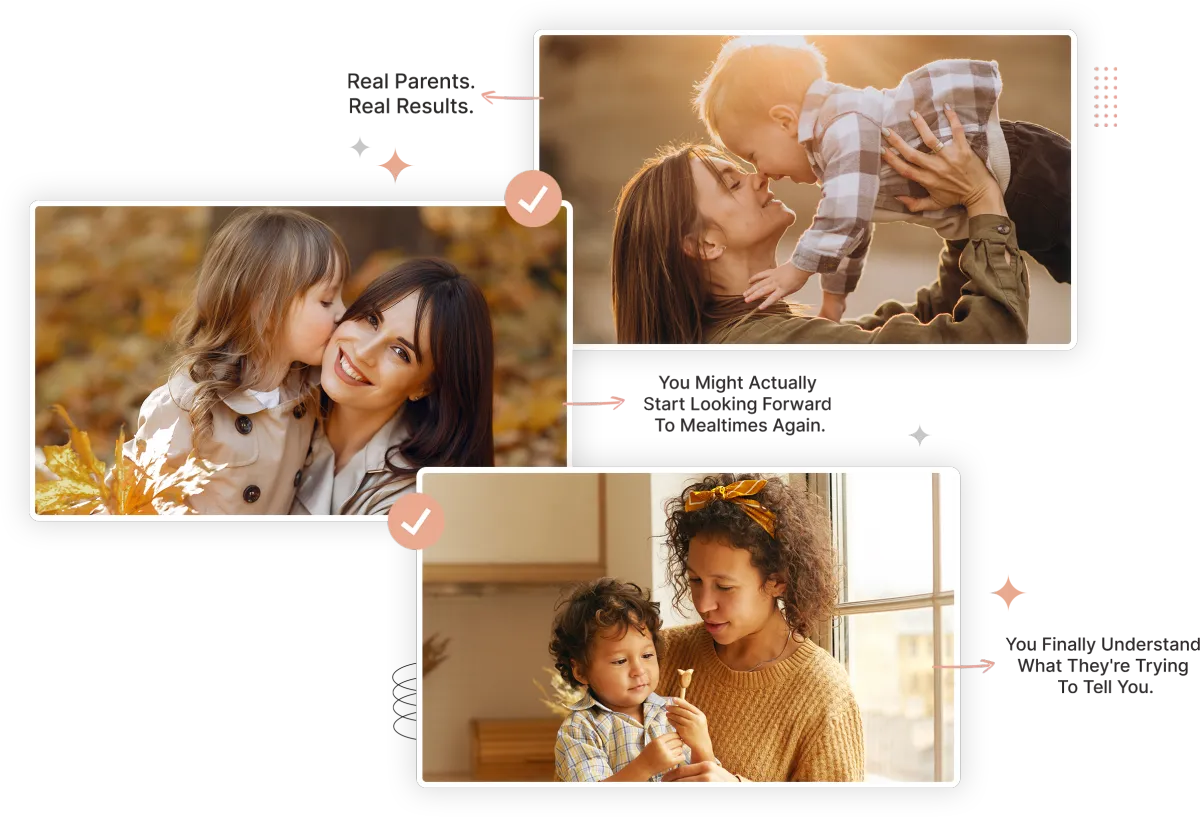
Real Parents. Real Results.
If you're like the thousands of families we've already helped,
you might actually start looking forward to mealtimes again.
Seriously, one of the best parts of using the Neural Gesture Framework is watching your baby's
face light up when they realize you finally understand what they're trying to tell you.
Limited Time Offer | Instant Download | 7x Free Bonus Gifts
⭐⭐⭐⭐⭐ 4.9 Based on 1,733+ Reviews
Our Free Gifts To You
Here's a quick look at your
7 free bonus gifts:
GIFT #1
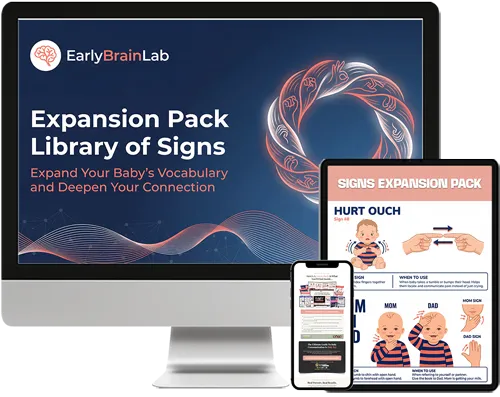
The Baby Signs Expansion
Pack (100+ Signs) ($67 Value)
Once you've mastered the 10 essential signs, you'll want more.
This comprehensive library gives you over 100 additional signs organized by category, so you can expand your baby's vocabulary as they grow..
Inside You'll Discover:
100+ signs organized by theme including animals, foods, feelings, activities, and everyday objects, so you can find exactly what you need
Clear visual demonstrations for each sign that anyone can learn in seconds
Age-appropriate recommendations so you know which signs to introduce as your baby develops
GIFT #2
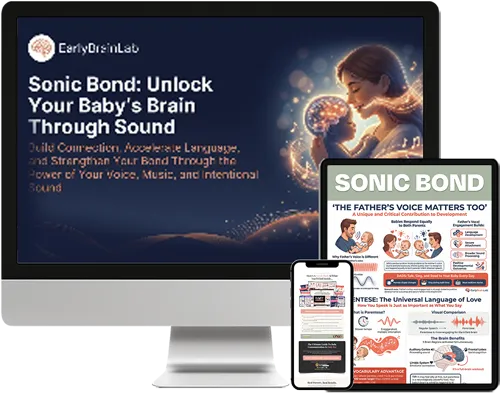
The Sonic Bond: Unlocking
Your Baby’s Brain With Sound
($79 Value)
Your voice is more powerful than any "baby genius" product on the market.
This science-backed guide shows you exactly how to use talking, singing, and rhythm to build your baby's brain during the critical first 18 months.
Inside You'll Discover:
Why your voice activates more of your baby's brain than any other sound, and how to use "Parentese" to boost their vocabulary by up to 100 words
The "Serve and Return" method from Harvard's Center on the Developing Child that builds the neural architecture for conversation
50 things to narrate throughout your day, organized by room, so you never run out of things to say
How rhythm and rhyme predict reading success better than IQ, and simple games that build phonological awareness
The 30-Day Sonic Bond Challenge, a day-by-day guide to transforming how you communicate with your baby
GIFT #3
The 7-Day Communication
Sprint ($27 Value)
Want to see results fast without figuring out what to do each day?
This day-by-day implementation roadmap tells you exactly which sign to teach, how to teach it, and what to look for, from Day 1 through Day 7.

Inside You'll Discover:
Day-by-day instructions that eliminate all guesswork and keep you consistent through the "silent period"
What early recognition actually looks like so you know it's working even before your baby signs back
Exactly when to add your second sign and how to layer signs without overwhelming your baby or yourself
GIFT #4
Quick Reference Cheat
Sheets ($17 Value)
Simple one-page guides for each of the 10 essential signs that you can share with anyone who cares for your baby.
Grandparents, nannies, daycare providers, your partner.
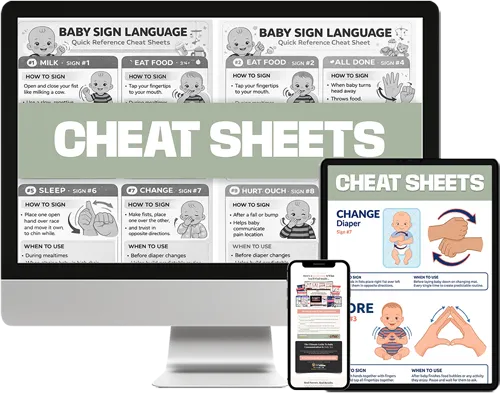
Inside You'll Discover:
Visual demonstrations of each sign that anyone can learn in 30 seconds
When to use each sign so everyone is reinforcing the same gestures at the same moments
What baby's version might look like so caregivers recognize and celebrate approximations
GIFT #5
The Early Brain Lab
Community ($97 Value)
Success is so much easier when you're surrounded by parents who get it, who understand the frustration of the guessing game, who've overcome the same struggles, and who refuse to accept that tantrums are "just part of having a baby."
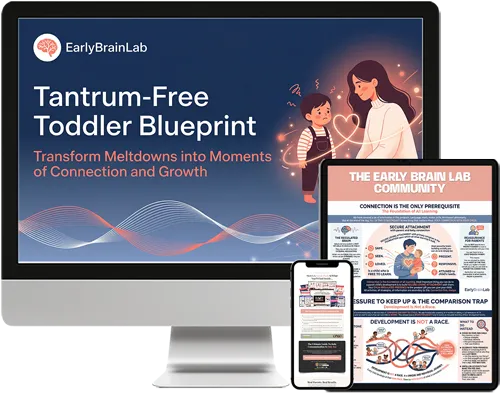
Inside, You'll Find:
Community of parents on the same journey who celebrate every win and help troubleshoot every challeng
Expert guidance and Q&A so you're never stuck wondering what to do
Inspiration from families who've transformed their communication even when they were ready to give up
GIFT #6
Brain-Building Activities
Guide ($37 Value)
Beyond the 10 essential signs, this guide gives you simple, playful activities that reinforce the neural pathways you're building through the Neural Gesture Framework.
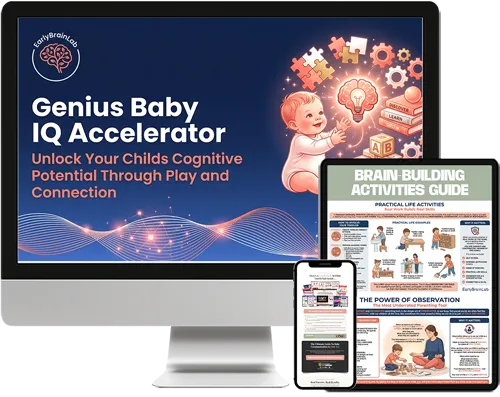
Inside This Exclusive Collection, You'll Get:
5-minute activities that build symbolic thinking while being genuinely fun for both of you
Routine-based games that require no extra materials or preparation
Developmental milestones to watch for so you can celebrate every step of progress
GIFT #7
The Troubleshooting Guide
($19 Value)
Stuck? Frustrated? Baby not signing back? This guide anticipates exactly where you'll get stuck, because every parent gets stuck in the same places.
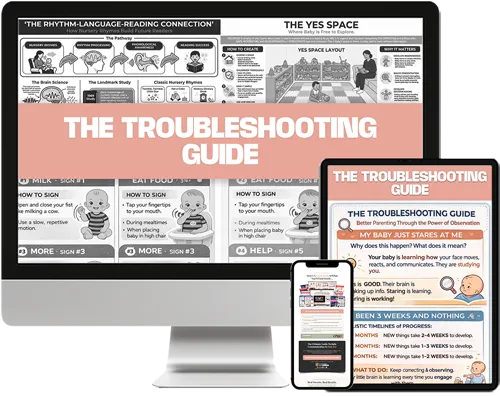
You'll Find:
"My baby just stares at me" — what's actually happening and why it means it's working
"It's been 3 weeks and nothing" — realistic timelines by age so you don't give up too early
"My partner isn't consistent" — how to get everyone on the same page without it becoming a thing
Your Price Today: Just $390 $37
Let's be honest about what $37 actually buys these days.
A week Of fancy coffee. A onesie they'll
outgrow in a month. Another toy that ends
up under the couch.
OR
A way to finally understand what your baby is trying to tell you. The end of the guessing game that's been exhausting you both.
Neural pathways that will serve their brain for the rest of their life, set them up for future success.
$37 for sanity. For connection. For a baby who can finally say "I'm hungry" instead of screaming until you figure it out.
That's not a purchase. That's a no-brainer.
Limited Time Offer | Instant Download | 7x Free Bonus Gifts
⭐⭐⭐⭐⭐ 4.9 Based on 1,733+ Reviews
This step-by-step system reveals...
How to give your baby a cognitive head
start that lasts a lifetime, not just a way to
stop today's tantrums
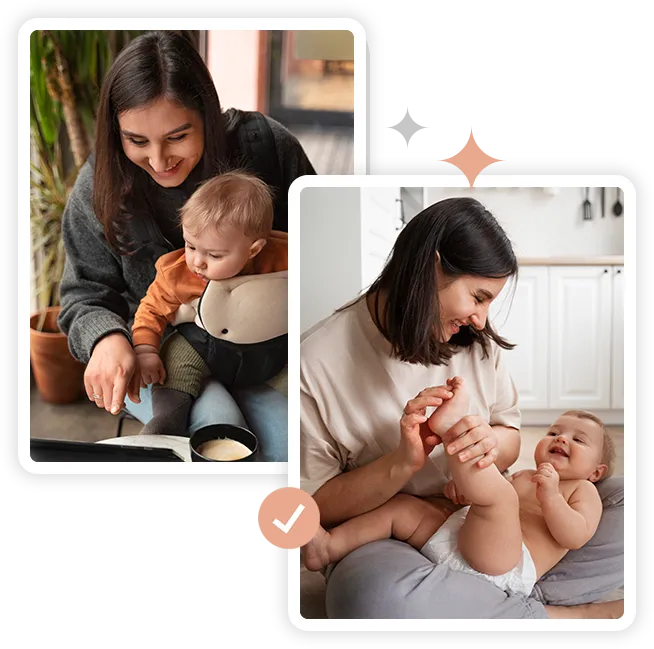
Yes, the guessing game ends. Yes, mealtimes get easier. Yes, the meltdowns fade.
But here's what most parents don't realize until later:
The signs are just the beginning. What you're really doing is building the neural architecture for symbolic thinking, the foundation of all language, reading, and higher-order learning.
Research shows babies who learn sign language speak earlier, have larger vocabularies by age 2, and score higher on IQ tests at age 8.
You're wiring their brain during the exact window when it matters most.
Every parent wants to give their child the best possible start.
You read to them. You talk to them. You buy the "right" toys. You worry if you're doing enough.
This is how you stop worrying and start knowing.
The Neural Gesture Framework doesn't just solve the communication gap today. It builds cognitive pathways your child will use for the rest of their life.
This system has already worked for over 1,500 families, and MANY of them started because of tantrums but stayed because they saw their baby's mind come alive.
Regardless of your baby's age, temperament, or how many times you've tried signing before,
THIS WORKS.
Teach The Right Signs → Build Their Brain
→ Set Them Up For Life
Again, altogether it's only $37 for lifetime access to ALL of these resources...
And you can easily go through the guide in one sitting, start the 7-Day Sprint today, and see your baby recognizing signs within a week.
Your baby's brain development window doesn't stay open forever.
The neural pathways being built right now will shape how they learn, communicate, and think for years to come.
This is your chance to make the most of it.
If you're ready to give your baby both a voice today AND a cognitive advantage for life...
1,733+Reviews
Real parents. Real results. Join thousands of families who have transformed their communication with their babies using Early Brain Lab's proven system.
The First Language System + 7 Bonuses Is Only $37
That's for lifetime access to the complete guide, with the ability to reference it whenever you need…
Plus 7 quick-start bonus gifts to help you implement immediately, get results
fast, and never feel stuck or unsure what to do next.
Limited Time Offer | Instant Download | 7x Free Bonus Gifts
⭐⭐⭐⭐⭐ 4.9 Based on 1,733+ Reviews
⭐⭐⭐⭐⭐ Over 1,733+ Reviews
Our BrainBuilder Parents
Get Amazing Results!
"I have three kids under five so when I say I don't have time for extra projects, I mean it. That was my hesitation.
But this isn't really an extra thing.
I just make the sign while I say the word during stuff I'm already doing. Pouring milk, sign milk. Handing him food, sign eat.
That's it. No practice sessions, no flashcards.
My 13-month-old was signing back within about three weeks and the mealtime screaming dropped off significantly.
It's not magic, he still has rough moments, but now he can at least tell me if he wants more or if he's done.
That alone has made a real difference in our day."

⭐⭐⭐⭐⭐
Priya M.
"Our daughter is three now and her preschool teacher says she's ahead on communication and reasoning compared to most kids in the class.
She speaks in pretty detailed sentences and she's good at telling us how she feels, like 'I don't want that one, I want the other one' instead of just crying.
We started signing with her at 9 months, just the basics.
Our theory is that learning signs early taught her that a gesture or a word can stand for something, and that clicked for her faster than it might have otherwise. Both of us believe it gave her a real foundation.
Her pediatrician has been happy with where she is at every checkup, which is all you can ask for as a parent."
⭐⭐⭐⭐⭐
Jen and Carlos A.
"I didn't do any of this with my first baby. Never heard of it. So we went through the usual — crying, guessing, both of us frustrated. I just thought that's how it was with babies. Then I found this program when my son was about 7 months old. He's 2 now and his preschool teacher has already told us he's ahead of most kids his age in communication. He speaks in short sentences, tells us how he's feeling, asks for things by name. He started signing at 10 months and the words followed fast. By 18 months he was putting two words together, which apparently most kids don't do until closer to 2. I really believe it's because he had that foundation of being able to communicate so early. His brain just connected things faster. The only thing I'd change is finding this sooner. If you're in that 6 to 18 month window right now, just start. You don't realize how much you're both missing out on until you see what it looks like on the other side."

⭐⭐⭐⭐⭐
Amanda L.
Frequently Asked Questions...
Your Questions Answered

"Will Teaching my baby sign language delay their speech?"
No. This is the most common concern, and decades of research have consistently shown the opposite is true. A landmark study by Drs. Linda Acredolo and Susan Goodwyn, funded by the National Institutes of Health, found that babies who learned sign language actually spoke earlier and had larger vocabularies by age 2. A follow-up study showed these same children scored higher on IQ tests at age 8. The key is that you always say the word out loud while you sign it.
Your baby gets both the visual and auditory input, building two pathways to the same meaning. Signs are a bridge to speech, not a replacement for it. Think of it this way: you don't worry that waving "bye-bye" will prevent your child from learning to say "goodbye." It's the same principle.
"When should I start? Is my baby too young or too old?"
You can start modeling signs from birth, but most babies won't sign back until they're 8-12 months old. That's because they need to develop the motor skills to make the hand movements.
The sweet spot for starting: 6-8 months is ideal. Your baby is absorbing everything, and you'll have time to build consistency before they start signing back.
If your baby is younger than 6 months: Start now! You'll be building the habit, and your baby is watching and learning even if they can't respond yet.
If your baby is already 12-18 months: It's not too late.
Older babies often pick up signs faster because their motor skills are more developed. Many learn their first signs within days, not weeks. The only "wrong" time to start is never.
"How long until my baby signs back?"
This varies by age and consistency, but here are realistic timelines:
Start at 0-7 months: Expect sign-back around 8-10 months
Start at 8-9 months: Expect sign-back around 10-12 months
Start at 12+ months: Could be days to a few weeks
The gap between when you start and when your baby signs back is called the "silent period." This is completely normal and where most parents give up. Your baby IS learning during this time, even though you can't see it yet.
Before they sign back, you'll notice recognition: they'll get excited when you make a sign, or look at the object you're signing about. That's proof it's working.
"I don't have time to add another thing to my day."
You're not adding anything. The entire system is built around routines you're already doing.
When you feed your baby, you say "milk" while making the sign.
When you offer more food, you say "more" while making the sign. When the meal is over, you say "all done" while making the sign.
You're not scheduling "sign language practice time." You're just adding a hand gesture to words you're already saying. It takes zero extra time once you get the hang of it.
In fact, most parents report saving time because they spend less energy guessing what's wrong and dealing with meltdowns.
"What if I do the signs wrong?"
Good news: there's no "wrong." Consistency matters infinitely more than perfection.
If your version of "eat" is a little different from the textbook version, but you use it every single time at every meal, your baby will understand it perfectly.
And here's something important: your baby's first signs will be approximations too.
Their "more" might just be banging their hands together vaguely. Their "milk" might look nothing like yours. That's completely normal and counts as success. The goal isn't perfect ASL. The goal is communication.
"I tried baby sign language before and it didn't work."
If you tried signing for 2-3 weeks and stopped, you probably quit right before the breakthrough.
The "silent period" (the gap between when you start and when your baby signs back) typically lasts 4-8 weeks depending on your baby's age. Most parents who give up do so during this exact window, right when their baby was about to start signing.
The difference this time: our 7-Day Sprint and Troubleshooting Guide are specifically designed to get you through the silent period. You'll know exactly what to look for, what's normal, and when to expect results.
"Can't I just Google the signs?"
You can find them in 3 seconds. But knowing the signs isn't the hard part. Implementation is.
Google won't tell you which 10 signs actually matter out of hundreds. It won't tell you what to do during the "silent period" when your baby isn't signing back and you're convinced it's not working. It won't help you troubleshoot 1-1 when you're stuck and ready to quit.
The signs are free. The system that gets you through the hard part is what you're paying for.
"What if my partner, grandparents, or daycare aren't on board?"
This is common, and it doesn't have to derail you. Here's the truth: your baby will learn signs even if only one person uses them consistently.
That said, the more caregivers who sign, the faster your baby learns and the less frustrated everyone becomes.
The Quick Reference Cheat Sheets (included free) are simple one-page guides you can share with anyone. Each sign takes about 30 seconds to learn. Most grandparents and caregivers are thrilled once they see the baby respond, and they become enthusiastic signers themselves.
"My baby just stares at me when I sign. Is it working?"
Yes. Staring IS learning.
Before your baby can sign back, they go through a recognition phase.
They're watching, processing, and building neural connections. You might notice them get excited when you make certain signs, or look toward the object you're signing about.
This is exactly what's supposed to happen. Keep going.
"Do I need to learn hundreds of signs?"
No. You only need 10.
Our research shows that 10 carefully selected signs cover 90% of what your baby desperately wants to tell you: this is what you will find in the starter pack.
These aren't random. They're the highest-impact, most-used signs that address the exact moments when frustration explodes.
Once you've mastered these 10, you can expand to more signs if you want (we include 100+ in the Expansion Pack), and the many other bonuses - but you don't need to.
Many families use just the core 10 throughout the entire signing journey.
"Is baby sign language the same as ASL?"
Baby sign language is based on American Sign Language (ASL), but simplified.
The signs we teach are real ASL signs, just the easiest and most functional ones for babies.
This means if your child continues learning sign language later, they'll have a real foundation.
And they'll be able to communicate with deaf and hard-of-hearing individuals using signs they already know.
"What if my baby is already starting to talk? Is it too late for signs?"
Not at all. Even babies who are developing speech benefit from signs.
Words like "hurt" and "help" are abstract and difficult to pronounce, but the signs are easy.
Signs give your toddler a backup communication tool for concepts their mouth can't handle yet.
Many parents find signs most valuable during the 12-18 month window when their baby understands far more than they can say. Signs fill that gap beautifully.
"Is this a one-time purchase or a subscription?"
One-time purchase. You pay $37 today and get lifetime access to everything: the complete guide, all 7 bonus gifts, and the community.
No hidden fees, no recurring charges, no upsells you have to buy to make it work.
"What if it doesn't work for my baby?"
Every baby who gets consistent sign exposure eventually signs back. Every single one.
The system works.
But if you buy the program and decide within 30 days, that this isn’t for you. Email us.
We'll refund every penny. No questions, no hoops.
We only want you to pay if this transforms your communication with your baby.
The First Language System Is Only $37
That's for lifetime access to the complete guide, with the ability to reference it whenever you need…
Plus 7 quick-start bonus gifts to help you implement immediately, get results
fast, and never feel stuck or unsure what to do next.
Limited Time Offer | Instant Download | 7x Free Bonus Gifts